Baby Steps

My young friend at school who has severe anxiety and spends most of his day in the special education classroom gave me a high-five today! It was super quick. Our hands only touched for a second, but I believe it is progress. He still won’t speak to me, but I sometimes get a smile. He continues to allow me to put a music stamp on his hand at the end of class as well.

I know he has rough days at school and often indicates that he’d rather be at home. Yet he seems to be smiling more this year than I remember from the previous year. Last year he wouldn’t come to art, music, or P.E., but now attends all three. Most of the time he simply observes and that is ok. He is there, taking in what’s happening around him, participating in his own way.

His teacher and paras love him so much. They refuse to give up on him, recognizing his capability for so much more. Progress is definitely being made, yet it could be easily missed if not looked for intentionally. I see this progress as he smiles and quietly teases with his teacher. It’s a beautiful thing.

That’s exactly what was happening today after school. I walked over to him and quietly asked for a high five. He smiled but hesitated. I teased a little, “Oh please. Can I have a high five?”  Then his teacher chimed in, also teasing,  “Don’t you give her a high-five. You better not give her a high-five.” We were laughing, and just as I was about to walk away, I saw his little hand move toward mine.  I told him “Thank you” and walked away…grateful.

Grateful to make another connection with this precious child.
Grateful for the connections his teachers are making.
Grateful that the power of love can be witnessed in these baby steps.

Forgiveness~Empathy~Friendship

Experiencing forgiveness, whether on the granting or receiving end, is powerful. Crucial life lessons are learned on both sides of a transgression. The one being forgiven feels a great relief and hopefully learns from their mistakes. The one offering forgiveness appreciates, even more, the instances when they have been on the receiving end. Sounds simple, yet not always the case.

Children often unintentionally demonstrate these truths clearly, if we take the time to watch and listen. Picture one of my kindergarten classes sitting around our music circle, coloring pictures of pumpkins and leaves.  Their fall themed artwork was also to include rhythmic patterns based on phrases about their subject.  For example, “leaves are falling” or “pumpkins everywhere” or “jump in a leaf pile.” Vivaldi’s “Autumn” playing quietly in the background.

Yes, I know it sounds very picturesque, but don’t be fooled.  This is one of those class times that is a struggle for me-giving up a certain level of control and giving students the chance to be social and creative.  It lends itself to a higher noise level and a tiny bit of controlled chaos.  Results are usually pretty cool!  That is until there is a transgression… one student marking on the beautiful, in progress, artwork of his friend.

Typically, it is the student who has been wronged that seeks my attention.  “She stuck her tongue out at me!” “He pulled my hair!” “She told me to shut up!” You get the idea.  On this particular day, the opposite was true. The artist didn’t make a big fuss although disappointed.  I told him he could start a new work if he’d like and asked the other student to apologize. Everyone back to work, all is well. Right?

A few moments later the student who committed the “coloring on my friend’s paper” infraction was standing in front of me with tears in his eyes. “Oh dear, what’s wrong?” I asked. “I apologized, but he wouldn’t accept my apology.” Hmmm…what to do? So many ways I could respond to this conflict. I’m not sure if my choice was the best, but it did have an interesting result.

Empathy-the ability to understand and share the feelings of another.

I began to talk to the teary-eyed transgressor about why his friend was upset. As with my own children, I attempted to help my student put himself in his friend’s place. “How would you feel if you were working hard on your artwork and someone marked on your paper?” On the surface a simple question, but not always an easy place to find yourself. His tears indicated his comprehension, and in a “kindergarten kind of way,” he began to understand.

For the remainder of the class, this particular friend stuck with me like glue. Tears turned to smiles, offers to help with clean up, wanting to have more conversations. Why? Just as being forgiven evokes feelings of relief and freedom, an apology not being accepted brings the opposite-guilt and sadness. However, when we learn to place ourselves in the shoes of the ones we have hurt, then we begin to develop empathy. Our focus moves from being self-centered to others-centered.

Which is more powerful? The ability to forgive or the ability to empathize? I suppose it depends on the situation, transgression, and the people involved. Obviously, consequences come into play, long and short term. But what if we see them as tied together, working hand in hand? I believe if we can help children learn to empathize, having a spirit of forgiveness will naturally follow. And just maybe they will begin to stop and think before making a choice which negatively affects their friend.

But wait, maybe the foundation for this whole discussion should instead be the word “friend.” Becoming a friend is a process. An acquaintance becomes a companion, the companion becomes a supporter, and so on. And if I truly support someone, I’m much more likely to think about the impact of my actions.

Once we learn what it means to be a friend, the potential for both empathy and forgiveness grows exponentially. It still requires effort and work. It does not just magically happen without being intentional. Like everything else worth doing in life, it takes practice. But the results are oh so worth the work!

Here’s to forgiveness, empathy, and friendship.  Especially when witnessed through the eyes of kindergarteners.  May I pay careful attention to opportunities this next week for expressing and teaching these vital life lessons during music class, especially the importance of being a good friend.

You’ve Got a Friend

I am a Teacher

Today was professional development.  So much information.  Don’t misunderstand, the issues presented, though challenging, were extremely important and relevant.  There were also moments of encouragement, celebrating what we are already doing successfully.  All in all, it was a productive work day and I enjoyed being with teacher friends.

So why did I have an emotional meltdown on my drive home?

Because even though it is necessary to focus on the hard things, that doesn’t mean it is easy. Topics such as kids facing trauma cast a shadow over the things we want our students to accomplish, the areas we would rather give our energy.  Yes, it is our responsibility as teachers to think about these things.  But unless we honestly share our thoughts, we run the risk of feeling defeated and overwhelmed.

Teacher friends-prop up your feet, take some time to relax.  Tomorrow is a new day and we will be ok.


ABC’s and 123’s

Stories, songs, rhymes

Learning to read and write

Learning to add and subtract

What I enjoy


Engage and interact

Activities, games, projects

Encouraging imagination

Encouraging creativity

What I hope to convey


Teach and learn

Information, plans, revisions

Desiring to do my best

Desiring to be successful

What I want to achieve


Trauma and abuse

Conflicts, behaviors, struggles

Learning how to recognize

Learning how to help

What I cannot avoid


React and respond

Panic, tears, laughter

Realizing I am not alone

Realizing I am enough

What I must accept

Pictures in the Clouds

This week I rediscovered the children’s book “It Looked Like Spilt Milk” by Charles G. Shaw.  I love this book!  If you’ve never read it, go look it up.  The author creatively takes his readers through a series of images in white on a dark blue background.  Childlike pictures are paired with simple, repetitive words, creating a beautiful backdrop for the imagination.

After reading this story to my students, I asked if they’d ever noticed pictures in the clouds.  Most excitedly raised their hands, eager to share.  We discussed the importance of using our imaginations, and I shared about finding pictures in the clouds when I was a kid.  Funny how that has become more difficult to do as an adult.

Creatively using our imaginations as a grownup often requires more intention than when we were kids.  Our adult minds are on information overload, concerned with family and job responsibilities.  Being imaginative gets put on the back burner, seen as a luxury instead of a necessity.  I wonder what would happen if that changed?  At the least, our stress levels would go down.

At the end of class I challenged my students to notice the clouds next time they go outside and report back to me what they see. Hopefully some of them remember.  Truthfully, I’m the one who needs to be challenged. Maybe my students responses will inspire me to take the time to go outside and look up.

The pictures in the clouds are always there, just waiting for us to imagine them. What do you see?

A Single Snapshot

I continue to be amazed how one photo has the power to bring such a flood of emotions.  Just when I think my heart is ok, one picture of my sweet friend Marie-and I’m crying.  See earlier blog post:   Face to Face with Child Abuse: Personal Reflections of a Teacher

A sweet teacher friend recognized Marie in an online adoption video and shared the link.  I had to watch it, of course.  Hearing how the social worker described her-listening as Marie answered questions about her favorite things-all I could think was, “I know the answer!”  Like an impatient student raising their hand, shouting, “Pick me! Pick me! Oh, and here’s some additional info you didn’t even ask for.”

I was struck by the social workers comment, “She deserves a family.”  I completely agree.  She’s not the only one.  While looking at this link, I saw pages and pages of other children-all with a story-all without a family.  And then my questions started all over again.  How does this happen?  Why does this happen so often?  What do we do to help?

My initial reaction was to shout inside my head, “I don’t have any answers!”  But when I took a step back and calmed my emotions, the following things came into focus:

  • Amazing people who have chosen to be foster parents.
  • Others who have adopted or are considering adoption.
  • People like myself-looking for ways to be an advocate and friend.

No, these positives won’t wipe away all the heartache.  They are however, small steps in the right direction.  When a child who has been neglected, abused, and deserted is able to experience love, acceptance, and security-the healing process begins.  I continue to witness this in my sweet friend.

There is still so much to do.  I don’t want to become complacent in searching for ways to advocate for my friend.  It’s also important for me to recognize the children right in front of me everyday who are facing the same kind of sadness and heartache.  Yes, it feels like an impossible, daunting task.  Today I was reminded of my role and responsibility-and for that reminder I’m thankful.

I was also reminded of the impact this one child has had on my heart.  No amount of my tears can cover the suffering she has endured, but seeing her smile gives me hope.

“And let us not grow weary while doing good, for in due season we shall reap if we do not lose heart.”  Galatians 6:9


List the Positives

Yesterday I vowed to keep a list of positives throughout the day today in hopes of helping my mood and focus.  Well…I have a list.  It took me until lunch time to actually start writing anything down, but by the end of the day my list covered both sides of a post-it note.

  •  Cooler weather
  •  Students positive responses to having a choice between whiteboards and popsicle  sticks for writing or constructing their rhythmic patterns.
  •  Hearing, “I got it right!”
  •  Receiving three books from students off of my book fair list.
  •  Unplanned, improvised “singing” of one of those books.
  •  A student who has severe anxiety, always sits alone and doesn’t speak to me,  accepted a music stamp on his hand when leaving class today.

Was it a perfect day?  No-there’s no such thing.  But was it a good day?  Yes.  And even though I may not be able to use my mood as an indicator for the success of the day, I can look back on my list and be reminded of the things that were good.  Funny thing is, almost all the items are things over which I have little or no control.

So what do I have control over?  Continuing to look for the positive.  My responses to the people and situations I encounter.  Loving my family, friends, and students.

Any guesses which book I sang today?  It was super fun!

books


Popsicle Sticks & Clouds

Time for confession-I am struggling this week.  Low days, fighting back tears, just the general blahs.  It will pass, I’m sure.  When this happens, thankfully I’ve learned to recognize it and say it out loud.  If it lasts longer than a week, there’s a need to talk with a trusted friend or family member.

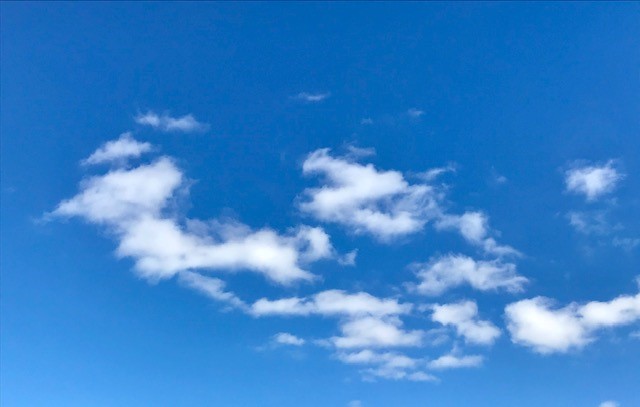
All that to say-I found myself searching for the positive on my drive home from school today.  The sun was shining, the sky a beautiful blue with perfect, fluffy, floating clouds. Besides blue being my favorite color, I’ve always been fascinated with the sky and its inhabitants.  Seeing one like this today most definitely helped my mood.

clouds2

Once my attitude began to change, I remembered kindergarten class from earlier today.  We’ve been learning about rhythmic patterns while going on our adventures with Freddie the Frog.  Today was review time and students were creating patterns on the Smart Board.  Their ability to not only create a pattern but also read it out loud was a pleasant surprise.

Each of them was eager to give it a try-all twenty of them-at the same time.  Suddenly I remembered the popsicle stick basket. First and second graders had used them the day before to create patterns on the carpet. I hadn’t planned on using them with kindergarten just yet.

Change of plans!  I asked the kiddos to move to our circle and gave each a hand full of popsicle sticks-rhythmic patterns began to appear everywhere!  Once we cleaned up, I asked students to brainstorm ways they could do this activity at home if they didn’t have popsicle sticks.  Crayons!  Pencils!  Markers!  Legos!  And on and on and on…one mentioned writing down their patterns.  Impressive!

Encouraged by the success of my kindergartners, I decided to attempt the activity I had asked them to try at home.  Here are my results.

Goal for tomorrow-begin my day looking for the positive.  Will I be successful?  I don’t know.  But hopefully I will remember that the simplest things can change my day for the better-even popsicle sticks and clouds.

Lessons Learned

Returned from a long weekend workshop to a not-so-great report from one of my classes…a fifth grade class.  You know, the ones who are supposed to be my leaders.  If there was any class to be concerned about, this would not have been the one I’d pick.  I was disappointed to say the least.  So the first day back started with a heart to heart chat.

While expressing my sadness over their actions and some missing candy, I knew the tears were going to start-mine, not theirs.  A few of them did join in after a few minutes.  My purpose in confronting the students was not to make them feel bad.  It was about giving them a chance to make a good choice and be honest about what happened while I was gone.

We all make poor choices sometimes.  All of us-no exceptions.  And even though it’s difficult, admitting those mistakes brings growth and freedom.  My students had the chance to make things right, and I’m proud to say almost all of them rose to the challenge.

Reading their apology notes later in the day, I once again found myself getting choked up.  There were sweet assurances of their love and appreciation-covered in hearts and music notes, of course.  For some, the realization and acknowledgement they had not fulfilled leadership roles.  But the one that touched me the most-“I’m so sorry that I made you feel sad.”  Wow.

Just as with my own children, I work hard to get my students to think about how their behaviors affect other people.  Or how they would feel being on the receiving end of an unkind word or action.  Today I learned that I must keep teaching those lessons.  They really do listen!  And when given the chance-make the right choice.  A choice with the power to encourage this teacher to keep teaching.

Fast forward…the next morning at school (day after our little chat) one sweet student said, “My brother and I have something for you.”  An entire bag of candy to replace what had “disappeared” while I was away.  The amazing thing is their mom would have had no way of knowing what happened unless they went home and shared.  It may seem like a small gesture to some, but for me…the best gift I could have possibly received.

Here’s to teaching! The lessons we impart, but more importantly the ones we learn along the way.

Teacher as Student

How often do we as teachers think of ourselves as students?  Do we look for opportunities to learn from our students? On those required PD days or weekend workshops, do we truly put ourselves in the position of learner?  I know the answer for me is often no, not really.  It’s easy to just check off another box or keep pressing through my lesson plans.  It’s much harder to focus on what I don’t know and admit needing help.

This weekend I truly experienced what it feels like to be a student.  There were moments of challenge that made my head hurt!  Activities that were way outside of my comfort zone.  I’d forgotten how frustrating those times can be, especially when they involve disagreements or differences in teaching philosophies.  I don’t particularly like to debate and often avoid conflict.  But I was reminded of their benefit and usefulness when used in structured and limited ways.

The challenging times were followed by moments of encouragement and creativity.  When you sing or dance with a group of people you’ve just debated, the air clears rather quickly.  There really is something powerful about music and it’s ability to influence mood and atmosphere.  And that is the root of what made this weekend so special.

Our topic was “Teaching Music to Students With Special Needs.”  The group of participants was made up of music teachers and special education teachers.  As you can imagine, the personalities, opinions, and philosophies were strong on both sides.  With the help of our amazing instructor, we were able to work together, learning new material and sharing helpful ideas from our own teaching experiences.

Tomorrow I will head back to my classroom.  Yes, I will be taking super fun, new, and exciting activities with me.  Hopefully those will help renew my energy as the teacher.  But more important than the activities will be the attention I give to my students as individuals, looking for ways to both support and challenge all of them.  Focusing on each one as a person first, while also recognizing and acknowledging their differences.

Being a student is hard work!  And to be a great teacher, I have to continue being a student, too!


Person First

Sometimes my brain plays tricks on me

And the person in my head

Doesn’t match the reflection I see

My life has great worth, though not all believe

Yet from the time I was born

My mom reassured me

I shout out “Hello!” from inside my brain

Even though you can’t hear it

I’m shouting it, just the same

Who do you see when you look my way?

Will you take time to know me

Or will you just look away?

Do you ever think about what others see?

When they look your way

Are you fretful or free?

No matter our differences, I hope you’ll agree

We are all persons first

Always remember…Oh, please!